| MOQ: | 1Stk |
| Preis: | USD9.99-99.99 |
| Standardverpackung: | Vakuumbeutel+Kartons |
| Lieferfrist: | 8-9 Werktage |
| Zahlungsmethode: | T/T |
| Lieferkapazität: | 5000 Stück pro Monat |
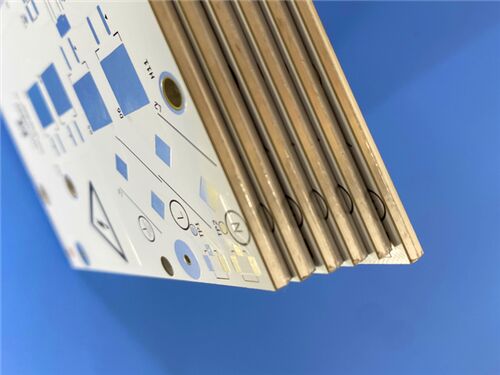
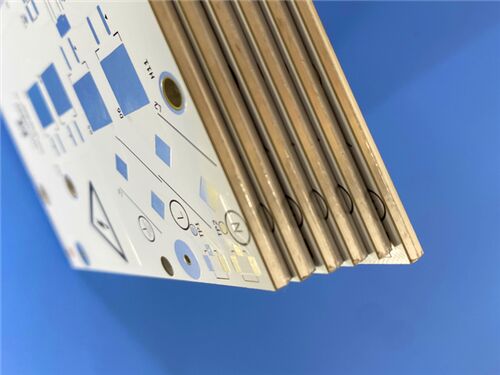
This printed circuit board (PCB) features a double-sided sandwich aluminum substrate configuration, specifically engineered for high-heat-dissipation applications. It adheres to strict dimensional and performance criteria to fulfill the operational requirements of high-reliability electronic systems.
PCB Specifications
| Construction Parameter | Specification |
| PCB Type | Double-Sided Sandwich Aluminum PCB |
| Thermal Conductivity | > 2 W/mK |
| Finished Board Thickness | 1.65mm ± 10% |
| Copper Thickness | 1oz |
| Surface Finish | Immersion Gold (ENIG), 2u" Gold Thickness |
| Solder Mask | Double-sided Green Solder Mask |
| Board Dimensions | 68mm × 54mm |
![]()
What is a Metal Core Printed Circuit Board (MCPCB)?
A Metal Core Printed Circuit Board (MCPCB) is a specialized type of PCB that utilizes a metal substrate—most commonly aluminum, though copper or iron may also be used—as its core, replacing the traditional FR-4 insulating substrate. Its primary function is to enhance heat dissipation, addressing the issue of heat buildup in high-power electronic components such as LEDs and power amplifiers. Acting as a heat conductor, the metal core efficiently transfers heat generated by components to an external heat sink, thereby improving component reliability and extending their service life. In comparison to conventional PCBs, MCPCBs offer superior thermal conductivity, mechanical strength, and electromagnetic shielding capabilities.
Differences Between Double-Layer Sandwich Aluminum Substrate and Double-Layer Single-Side Aluminum Substrate
Double-Layer Sandwich Aluminum Substrate
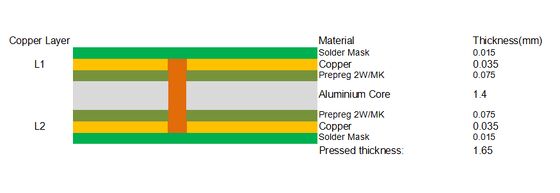
Structural Features: The core of this substrate is a layer of aluminum. Insulating layers (e.g., PP, PI) are attached to both the upper and lower surfaces of the aluminum core, with a layer of copper foil pressed onto the outer side of each insulating layer to form two separate upper and lower circuit layers.
| Layer | Type | Material | Thickness (mm) | Remarks |
| 1 | Solder Mask | Solder Mask | 0.015 | Top Protective Layer |
| 2 | Copper Foil | Copper | 0.035 | Top Circuit Layer |
| 3 | Prepreg | 2W/MK Prepreg | 0.075 | High Thermal Conductivity Dielectric Layer |
| 4 | Metal Substrate | Aluminum Core | 1.4 | Metal Substrate Core, Main Thermal Conductive Layer |
| 5 | Prepreg | 2W/MK Prepreg | 0.075 | High Thermal Conductivity Dielectric Layer |
| 6 | Copper Foil | Copper | 0.035 | Bottom Circuit Layer |
| 7 | Solder Mask | Solder Mask | 0.015 | Bottom Protective Layer |
| Total Thickness | - | - | 1.65 | Total Thickness After Lamination |
![]()
Simple Understanding: The aluminum core is positioned in the middle, with circuit layers on both sides—similar to a "sandwich cookie," where the aluminum serves as the filling and the two copper layers act as the cookie layers. Both sides can conduct heat to the aluminum core, enabling uniform heat dissipation across the entire board.
Double-Layer Single-Side Aluminum Substrate
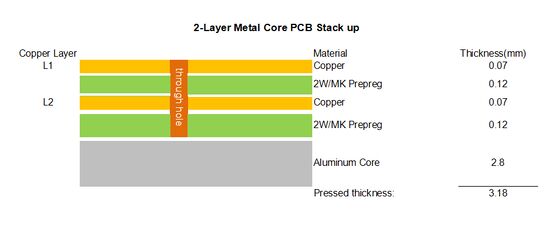
Structural Features: Unlike the sandwich structure, this type of substrate only has an aluminum substrate on one side to serve as the heat dissipation layer, while the other side is made of ordinary insulating materials such as FR-4. Although it has two copper foil layers (located on the top first and second layers), only the side with the aluminum substrate can effectively conduct heat to the aluminum core.
| Layer | Type | Material | Thickness (mm) | Remarks |
| L1 | Copper Foil | Copper | 0.07 | Top Circuit Layer, Through-hole Connection |
| - | Dielectric Layer | 2W/MK Prepreg | 0.12 | High Thermal Conductivity Material |
| L2 | Copper Foil | Copper | 0.07 | Bottom Circuit Layer, Through-hole Connection |
| - | Dielectric Layer | 2W/MK Prepreg | 0.12 | High Thermal Conductivity Material |
| - | Metal Substrate | Aluminum Core | 2.8 | Lamination Thickness, Main Thermal Conductive Layer |
| Total Thickness | - | - | 3.18 | Total Thickness After Lamination |
![]()
Simple Understanding: Aluminum is only present on one side of the board, and the opposite side does not contribute to heat dissipation. It can be visualized as a "double-layer board with aluminum on one side," where the heat dissipation effect is limited to the side containing the aluminum core.
![]()
| MOQ: | 1Stk |
| Preis: | USD9.99-99.99 |
| Standardverpackung: | Vakuumbeutel+Kartons |
| Lieferfrist: | 8-9 Werktage |
| Zahlungsmethode: | T/T |
| Lieferkapazität: | 5000 Stück pro Monat |
This printed circuit board (PCB) features a double-sided sandwich aluminum substrate configuration, specifically engineered for high-heat-dissipation applications. It adheres to strict dimensional and performance criteria to fulfill the operational requirements of high-reliability electronic systems.
PCB Specifications
| Construction Parameter | Specification |
| PCB Type | Double-Sided Sandwich Aluminum PCB |
| Thermal Conductivity | > 2 W/mK |
| Finished Board Thickness | 1.65mm ± 10% |
| Copper Thickness | 1oz |
| Surface Finish | Immersion Gold (ENIG), 2u" Gold Thickness |
| Solder Mask | Double-sided Green Solder Mask |
| Board Dimensions | 68mm × 54mm |
![]()
What is a Metal Core Printed Circuit Board (MCPCB)?
A Metal Core Printed Circuit Board (MCPCB) is a specialized type of PCB that utilizes a metal substrate—most commonly aluminum, though copper or iron may also be used—as its core, replacing the traditional FR-4 insulating substrate. Its primary function is to enhance heat dissipation, addressing the issue of heat buildup in high-power electronic components such as LEDs and power amplifiers. Acting as a heat conductor, the metal core efficiently transfers heat generated by components to an external heat sink, thereby improving component reliability and extending their service life. In comparison to conventional PCBs, MCPCBs offer superior thermal conductivity, mechanical strength, and electromagnetic shielding capabilities.
Differences Between Double-Layer Sandwich Aluminum Substrate and Double-Layer Single-Side Aluminum Substrate
Double-Layer Sandwich Aluminum Substrate
Structural Features: The core of this substrate is a layer of aluminum. Insulating layers (e.g., PP, PI) are attached to both the upper and lower surfaces of the aluminum core, with a layer of copper foil pressed onto the outer side of each insulating layer to form two separate upper and lower circuit layers.
| Layer | Type | Material | Thickness (mm) | Remarks |
| 1 | Solder Mask | Solder Mask | 0.015 | Top Protective Layer |
| 2 | Copper Foil | Copper | 0.035 | Top Circuit Layer |
| 3 | Prepreg | 2W/MK Prepreg | 0.075 | High Thermal Conductivity Dielectric Layer |
| 4 | Metal Substrate | Aluminum Core | 1.4 | Metal Substrate Core, Main Thermal Conductive Layer |
| 5 | Prepreg | 2W/MK Prepreg | 0.075 | High Thermal Conductivity Dielectric Layer |
| 6 | Copper Foil | Copper | 0.035 | Bottom Circuit Layer |
| 7 | Solder Mask | Solder Mask | 0.015 | Bottom Protective Layer |
| Total Thickness | - | - | 1.65 | Total Thickness After Lamination |
![]()
Simple Understanding: The aluminum core is positioned in the middle, with circuit layers on both sides—similar to a "sandwich cookie," where the aluminum serves as the filling and the two copper layers act as the cookie layers. Both sides can conduct heat to the aluminum core, enabling uniform heat dissipation across the entire board.
Double-Layer Single-Side Aluminum Substrate
Structural Features: Unlike the sandwich structure, this type of substrate only has an aluminum substrate on one side to serve as the heat dissipation layer, while the other side is made of ordinary insulating materials such as FR-4. Although it has two copper foil layers (located on the top first and second layers), only the side with the aluminum substrate can effectively conduct heat to the aluminum core.
| Layer | Type | Material | Thickness (mm) | Remarks |
| L1 | Copper Foil | Copper | 0.07 | Top Circuit Layer, Through-hole Connection |
| - | Dielectric Layer | 2W/MK Prepreg | 0.12 | High Thermal Conductivity Material |
| L2 | Copper Foil | Copper | 0.07 | Bottom Circuit Layer, Through-hole Connection |
| - | Dielectric Layer | 2W/MK Prepreg | 0.12 | High Thermal Conductivity Material |
| - | Metal Substrate | Aluminum Core | 2.8 | Lamination Thickness, Main Thermal Conductive Layer |
| Total Thickness | - | - | 3.18 | Total Thickness After Lamination |
![]()
Simple Understanding: Aluminum is only present on one side of the board, and the opposite side does not contribute to heat dissipation. It can be visualized as a "double-layer board with aluminum on one side," where the heat dissipation effect is limited to the side containing the aluminum core.
![]()